Orion Nebula: A Stellar Nursery in Our Cosmic Backyard
“Over the edge of the world now comes forth Great Orion, Hunter of the Stars. Behold the gleaming star-fire of his sword!”
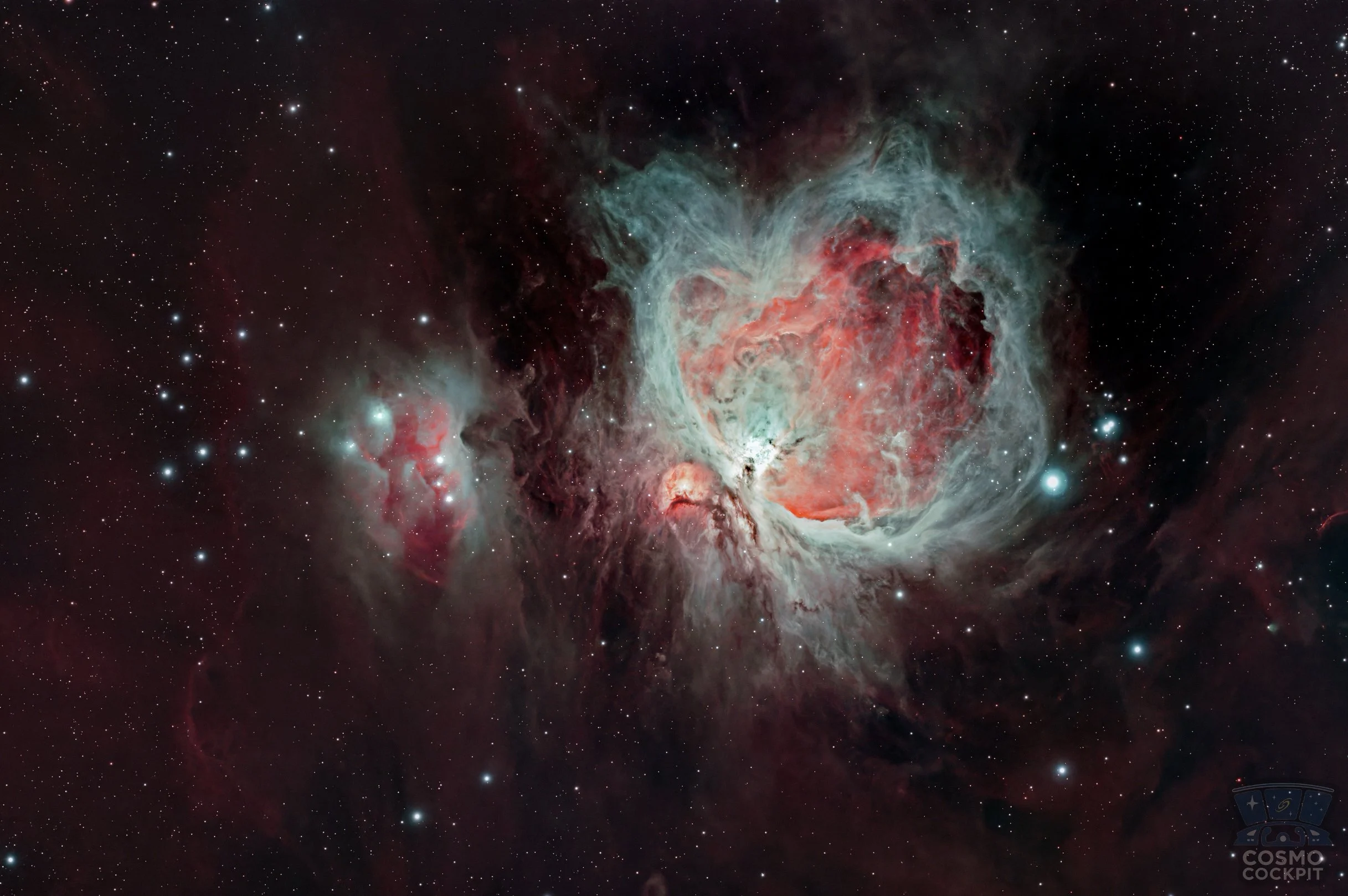
The Orion Nebula (M42), surrounded by De Mairan’s Nebula (M43) and NGC1977 (Running Man Nebula), after 4h 30m total exposure.
Once called the Great Nebula in Orion (also known as Messier 42, M42, or NGC 1976), this Orion Nebula is one of the sky's brightest diffuse objects, situated just south of Orion's Belt. It is one of the closest stellar nurseries and one of the most active star formation regions in the Milky Way.
Home to tens of thousands of new stars formed within the last ten million years, M42 stretches an estimated 24 light-years across and lies 1,340 light-years away, a gateway into the wonders of stellar birth and, probably, the most beautiful Deep Sky Object (DSO) in the northern sky.
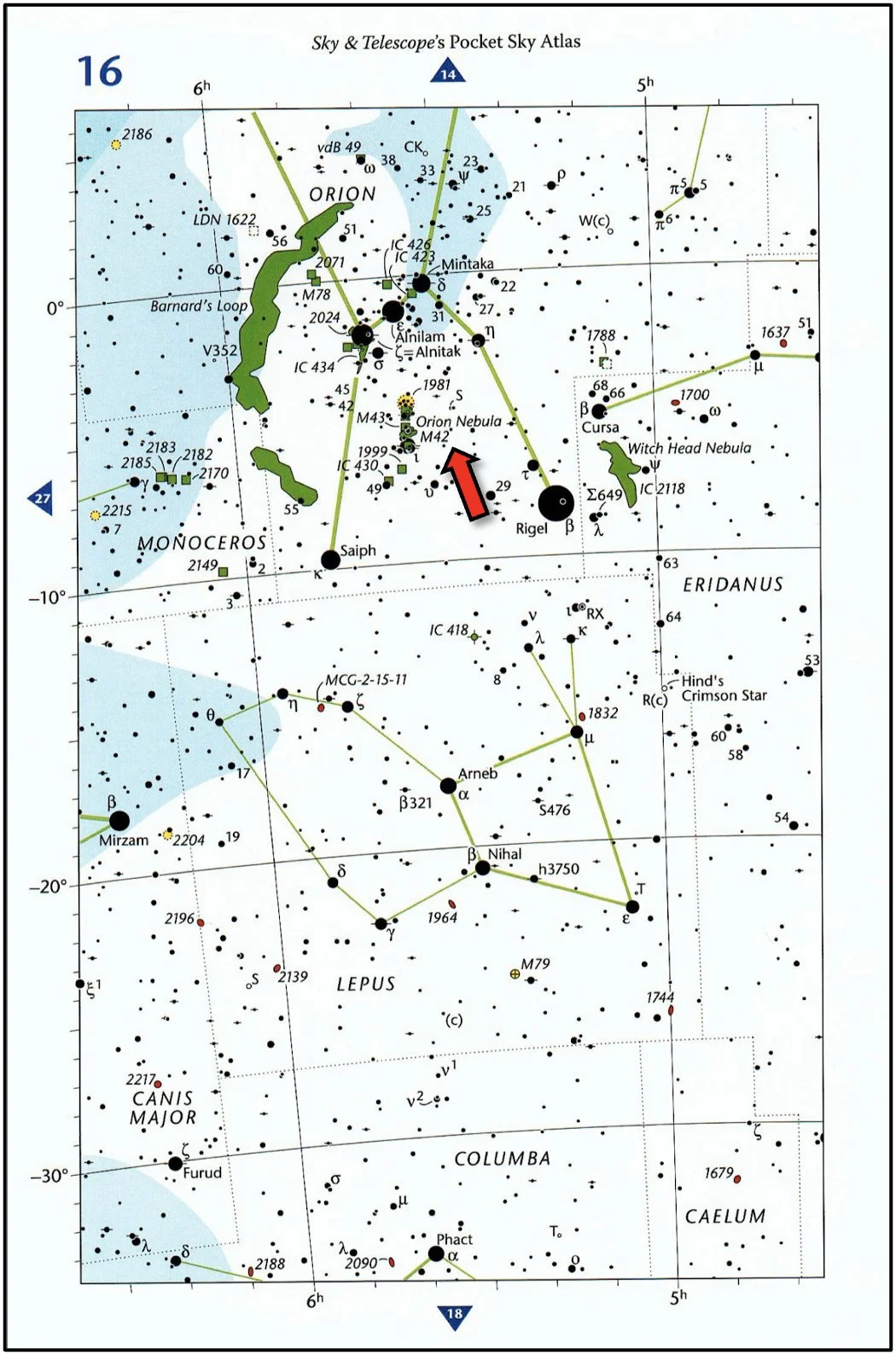
Sky and Telescope's Pocket Sky Atlas - Roger W. Sinnott.
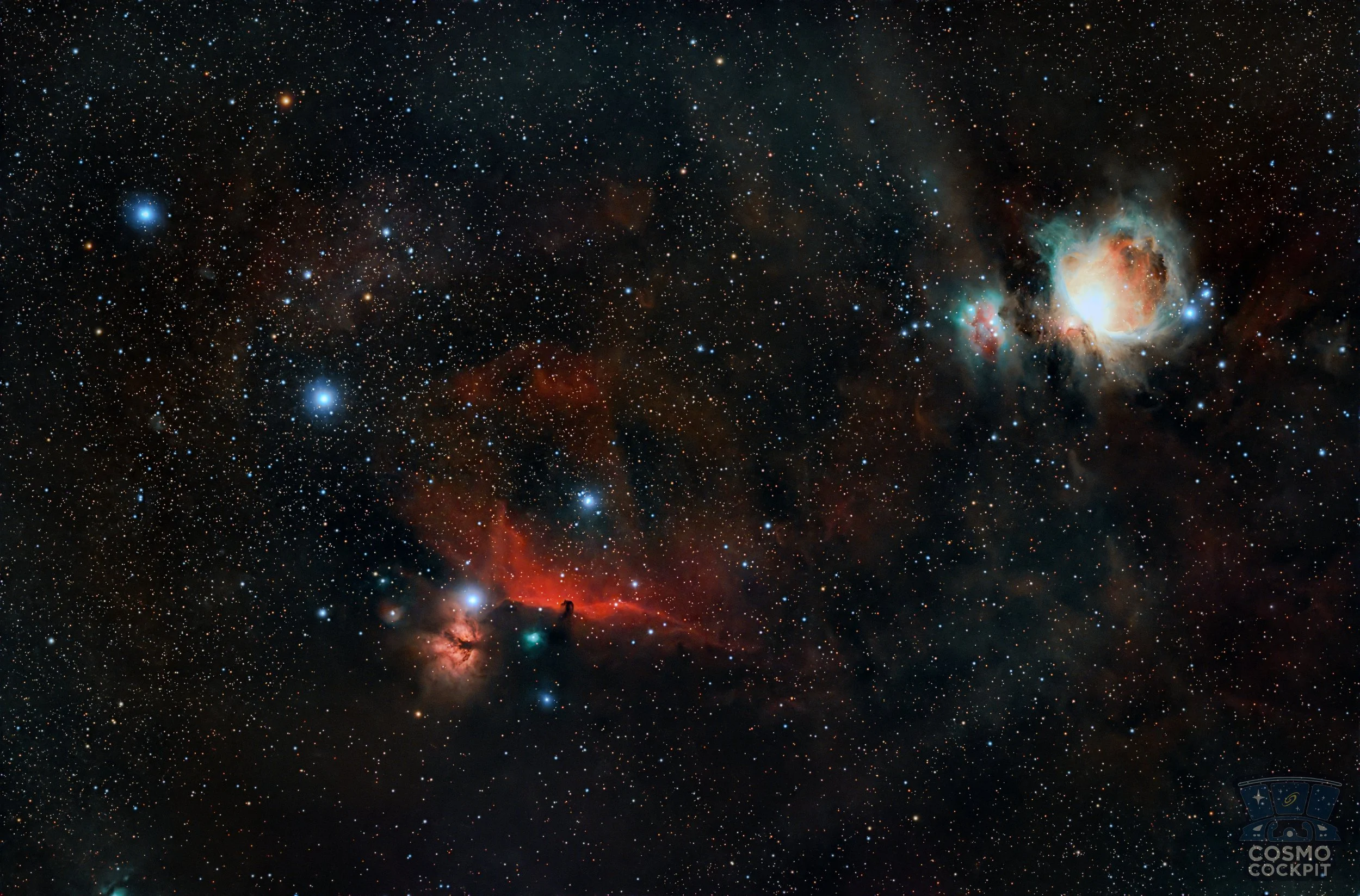
The Orion Complex from Alnitak to M42: A sweeping look across Orion’s Belt and Sword, where glowing hydrogen clouds, dark dust lanes, and newborn stars coexist in one of the night sky’s most vibrant neighborhoods. From the Horsehead and Flame to the Running Man and the Great Orion Nebula, this field captures the constellation’s most iconic structures in a single frame.
History
M42 was not known to pre-telescopic observers, nor do we find any hints in ancient documents of naked-eye sightings of this nebula.
By 1609, Galileo Galilei had sketched the star field around the Orion Nebula with his telescope. He counted 80 stars but, mysteriously, did not recognize the nebula. The Frenchman Nicholas-Claude Fabri de Peiresc was the first to mention it in 1611.
In 1656, Christian Huygens observed M42 and described the Trapezium cluster (the four stars at the fiery mist core of the nebula) for the first time.
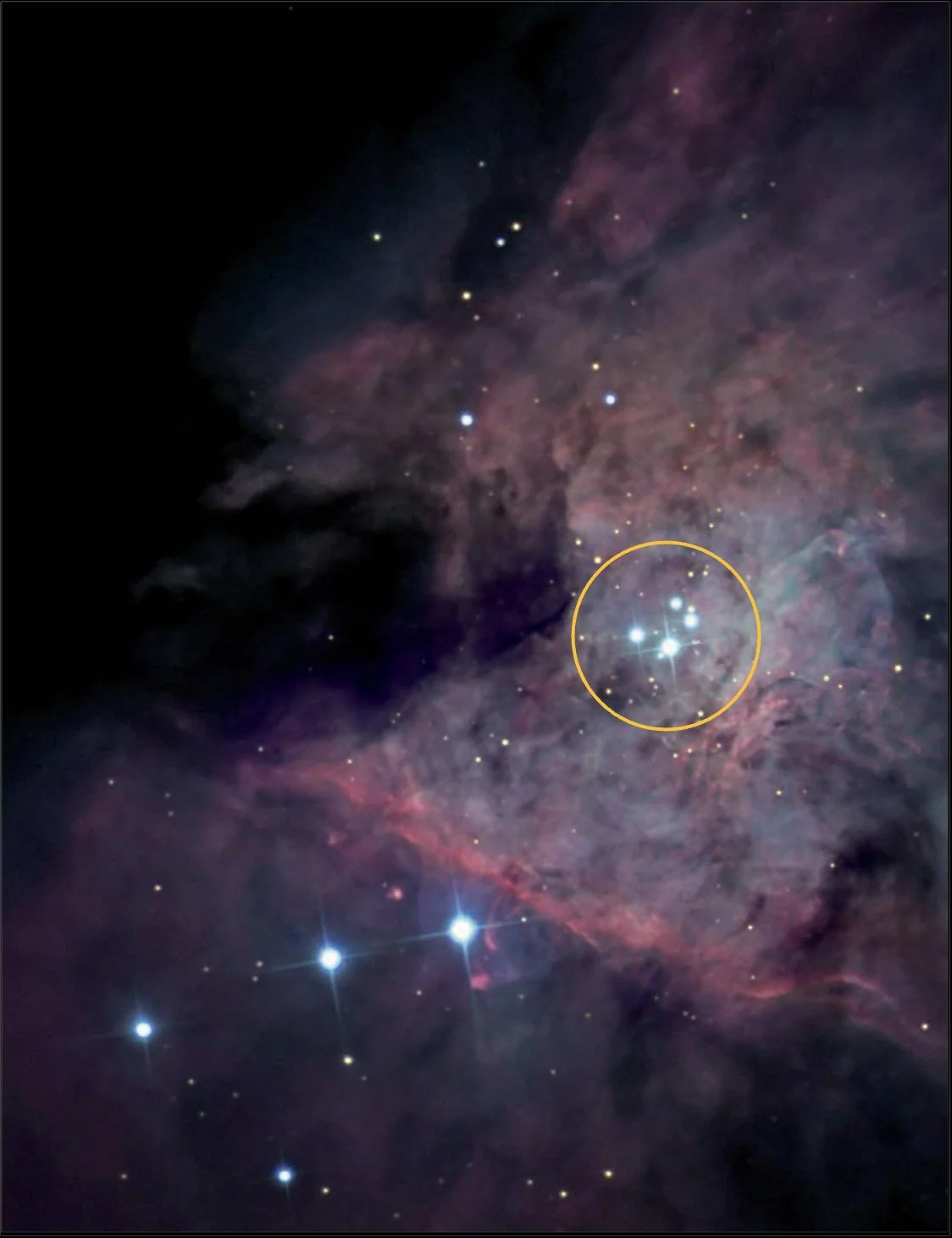
The center of the well-defined Huygens region hosts the Trapezium cluster, the region's central stars. Photo by Stefan Binnewies - Atlas of the Messier Objects - Highlights Of The Deep Sky, by Ronald Stoyan.
Le Gentil made a drawing in 1758 and gave the first description of the nebula region named after him and the "wings" of the nebula:
"It appears to have the shape of an open claw of an animal. To the west, I observed an extension of light, forming a rectangle: this light is very diffuse. The three stars in a straight line in the 'lower claw' appear entirely detached from the nebula. The four stars in the center appear extraordinarily brilliant."
Charles Messier added the already well-known Orion Nebula to his catalog with an observation made on the 4th of March 1769.
Astrophysics
M42 is a prototypical galactic nebula and continues to fascinate professional and amateur astronomers. At a distance of only 1,340 light-years, it offers a view of the glowing cavity of a large molecular cloud, where stars have just formed and are beginning to shed their surrounding cocoon of dust.
The Trapezium cluster, mostly consisting of stars with half to two solar masses, has a spectacular density of 6,000 stars per cubic light-year, which makes it the richest open cluster known.
Many of these very young stars have not yet reached the main sequence but are still contracting and accreting mass. Hubble images have shown that their planetary systems are still forming: many stars are surrounded by proto-planetary disks (also known as "proplyds").
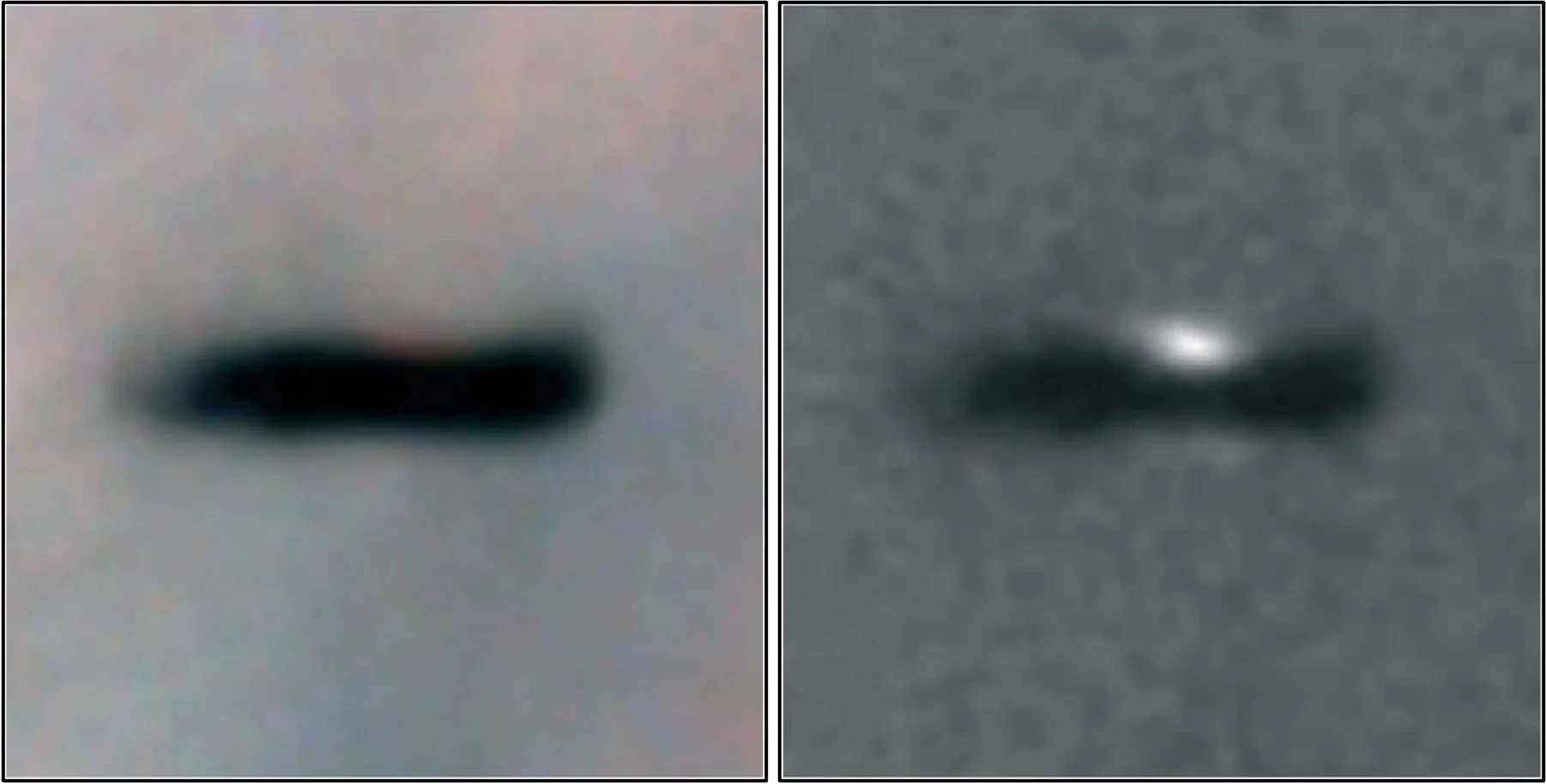
These high-resolution images show "proplyds": young stars surrounded by dust disks. Hubble Space Telescope.
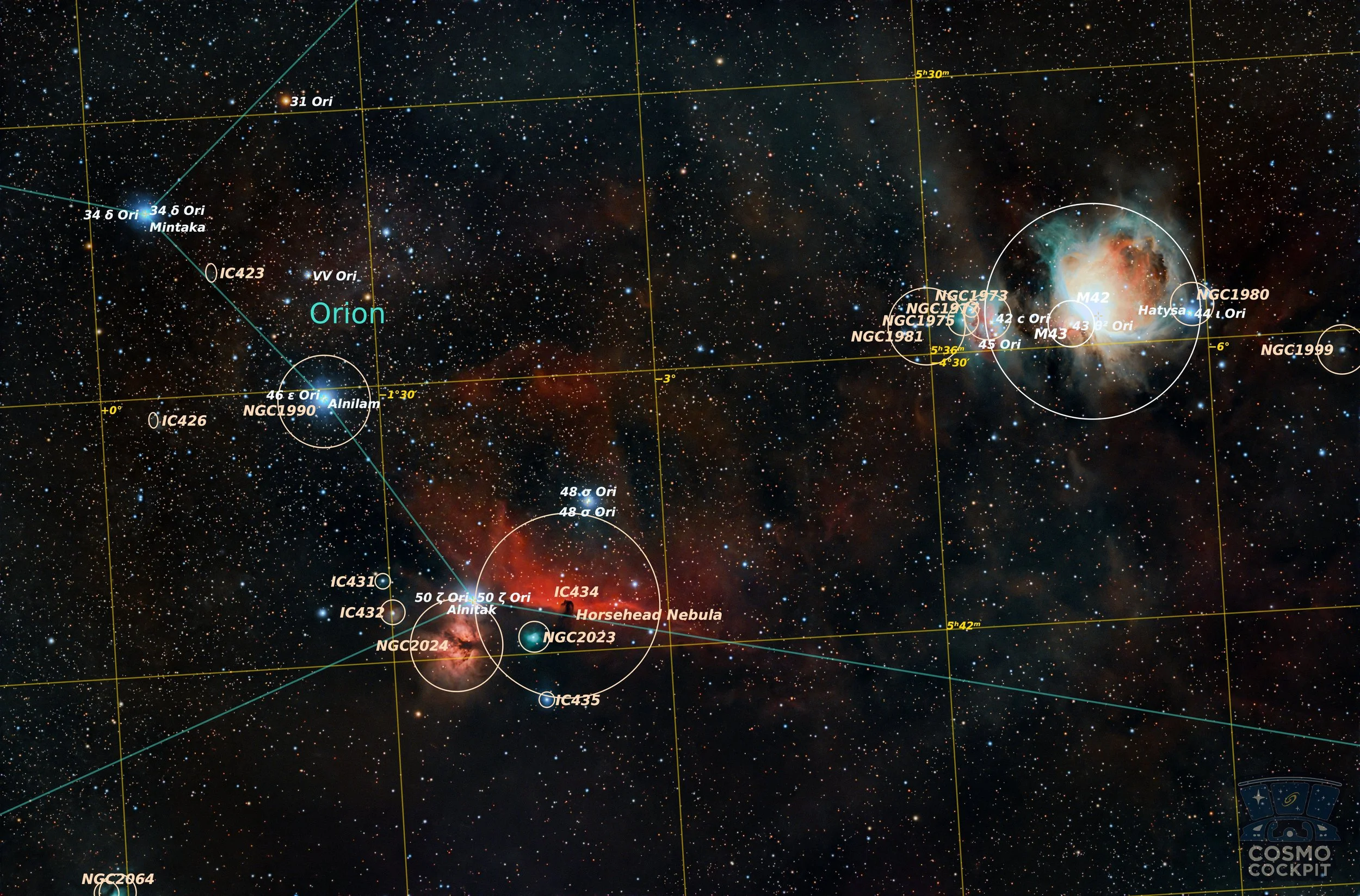
M42 is only the brightest part of the facing side of a much larger (10°) dark cloud - the Orion Molecular Cloud Complex (OMC) - which consists mainly of cool dust and gas. It comprises M78, NGC 1973/75/77 and the famous Horsehead Nebula.
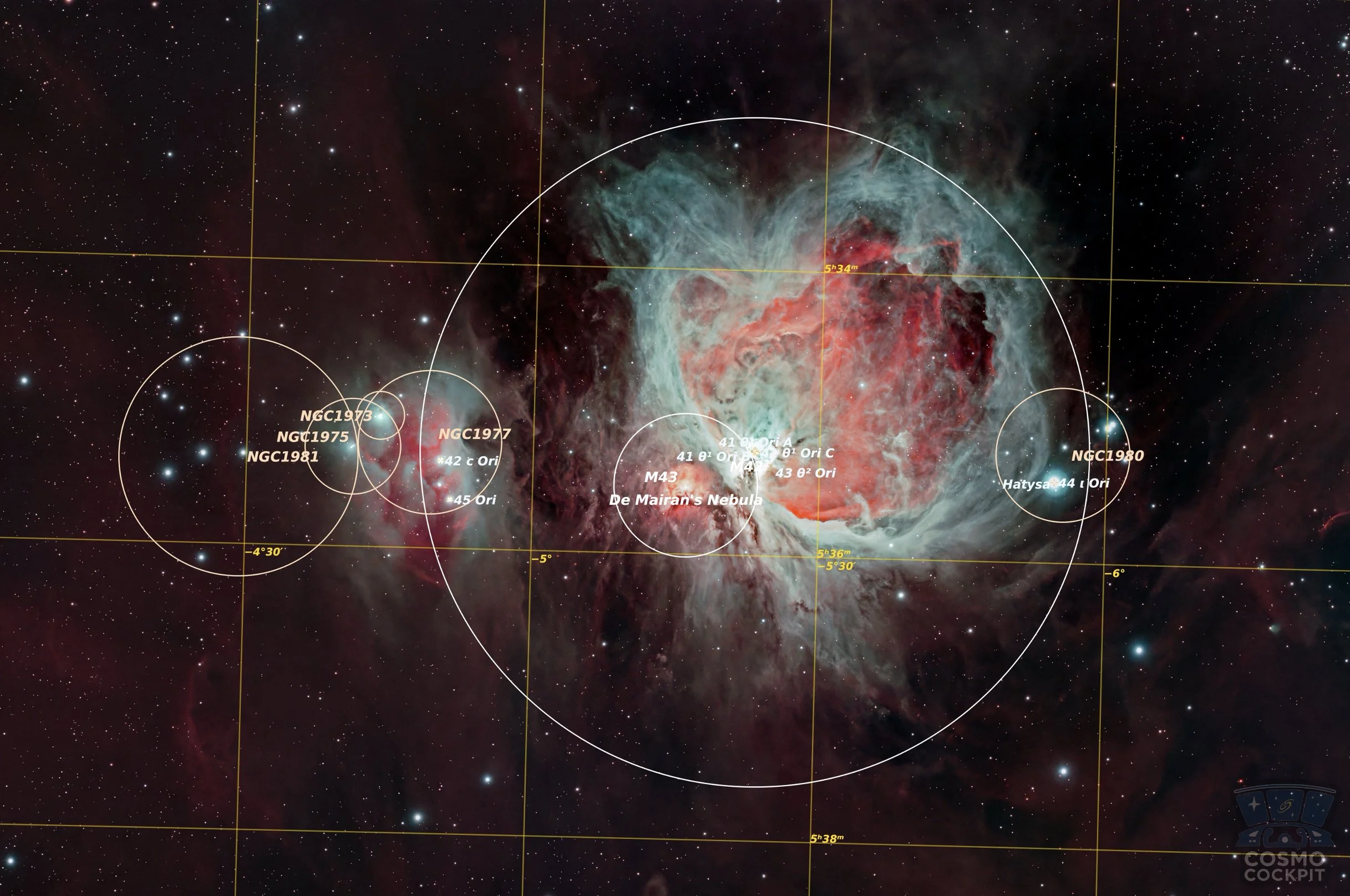
The Orion Molecular Cloud Complex (OMC). Plate solved and annotated by PixInsight.
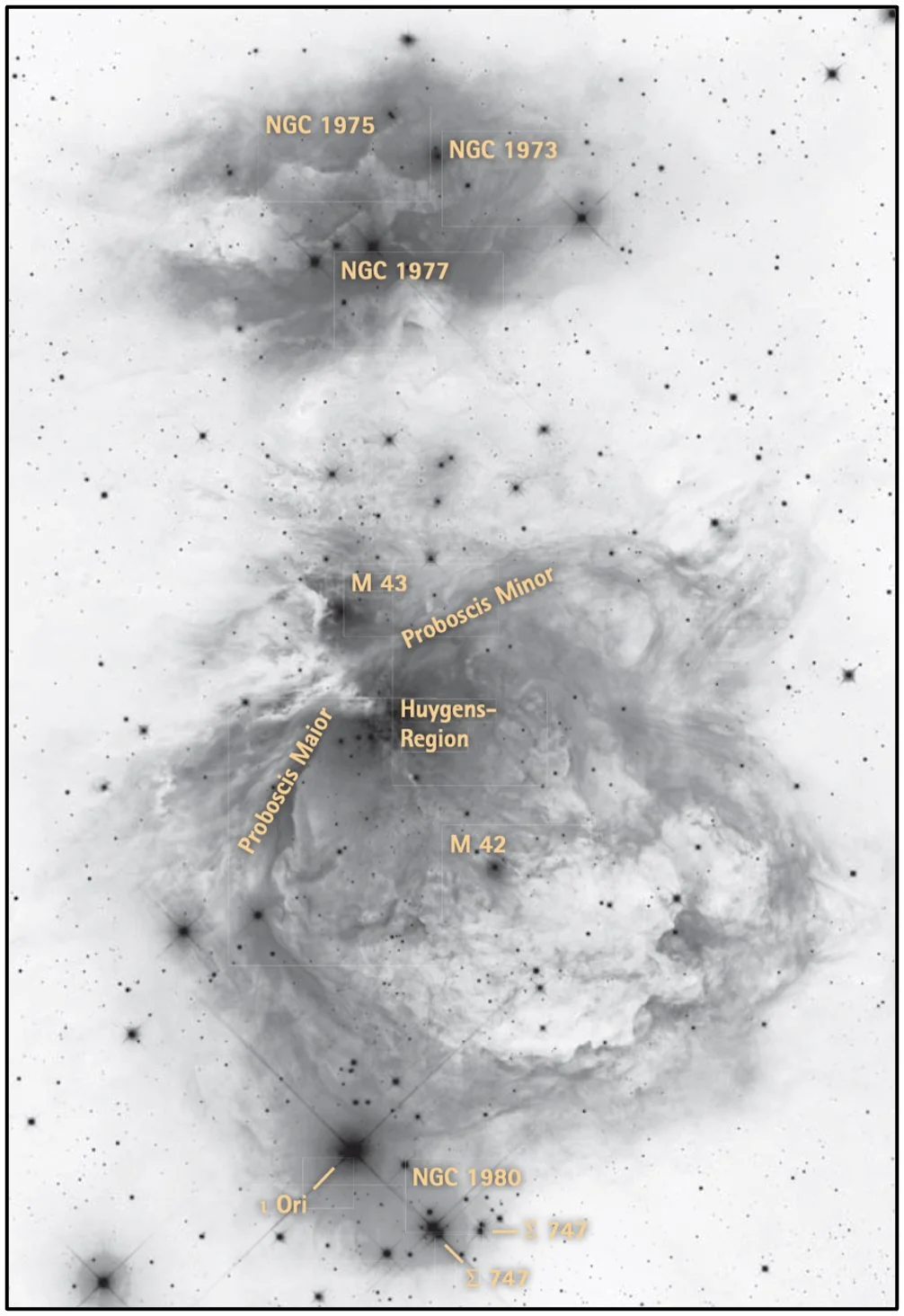
Atlas of the Messier Objects - Highlights Of The Deep Sky, by Ronald Stoyan.
Running Man Nebula (Sh2-279)
At the northern side of Orion's Sword, about a half degree from the Great Orion Nebula, lies a less famous but still photogenic star-forming region rich in dust and hot, young stars. It is composed of the reflection nebulae NGC 1977, NGC 1975, and NGC 1973, and, taken together, is often referred to as the Running Man Nebula, or Sh2-279 (Sharpless 279).
De Mairan’s Nebula (M43)
Separated from the larger Orion Nebula by a dark lane of interstellar dust, Messier 43 (M43), also known as De Mairan's Nebula, is a prominent emission nebula in the expansive Orion stellar nursery.
At the heart of M43 lies the massive HD 37061 quadruple star system, also known as NU Orionis, whose intense ultraviolet radiation ionizes the surrounding hydrogen gas, causing the nebula to emit its characteristic reddish glow, and influences the M43 nebula's shape into intricate patterns.
Observation
The Orion Nebula is the brightest in the night sky, and it was the target for the first deep sky image ever taken by Henry Draper in 1880. It is also usually the first target for many amateur astrophotographers — an easy target even with short exposures.
Pinks and greens are readily apparent in the emission and reflection components — one of the few objects bright enough to require different exposure lengths to capture its full dynamic range. The nearby Running Man nebula (Sh2-279) features several bright stars within bright nebulosity, and is usually captured in the same field of view as M42.
A moderate telescope may already show the Huygens region as greenish, caused by its Oxygen-III (OIII) emission. Hydrogen-Alpha (Ha) glows red, and dust lanes weave intricate patterns.
Small telescopes do not show any stars in the central part of M42, except for the Trapezium. The difficulty in observing stars in the Orion Nebula comes from the bright background light.
Astrophotography Tips
The Orion Nebula appears fabulous, framed either alone or alongside the Running Man Nebula.
Exposure strategy:
The central part of the Orion Nebula, in the region of the Trapezium, is easily overexposed. When you begin imaging, take test exposures of 1, 2, and 3 minutes to determine the optimal exposure duration.
Try to show as much detail as possible in the outer areas of the nebula without saturating the core by combining short exposures (to preserve the bright core) with longer ones (to capture faint outer nebulosity).
Filters:
Narrowband filters (Hα, OIII, SII) highlight emission regions, while broadband captures natural color.
Processing:
The biggest challenge in processing the Orion Nebula is the tremendous brightness difference between the core around the Trapezium and the dim outer arms. Routine histogram stretching, whether using digital development or levels and curves, is insufficient. One solution is to process your image twice, once for the central area (core image) and again for the rest of the nebula (nebula image).
Post-processing:
Blend HDR techniques in PixInsight or Photoshop to balance dynamic range.
Check our post in AstroBin.