Eagle Nebula: A Cosmic Cradle of Stars
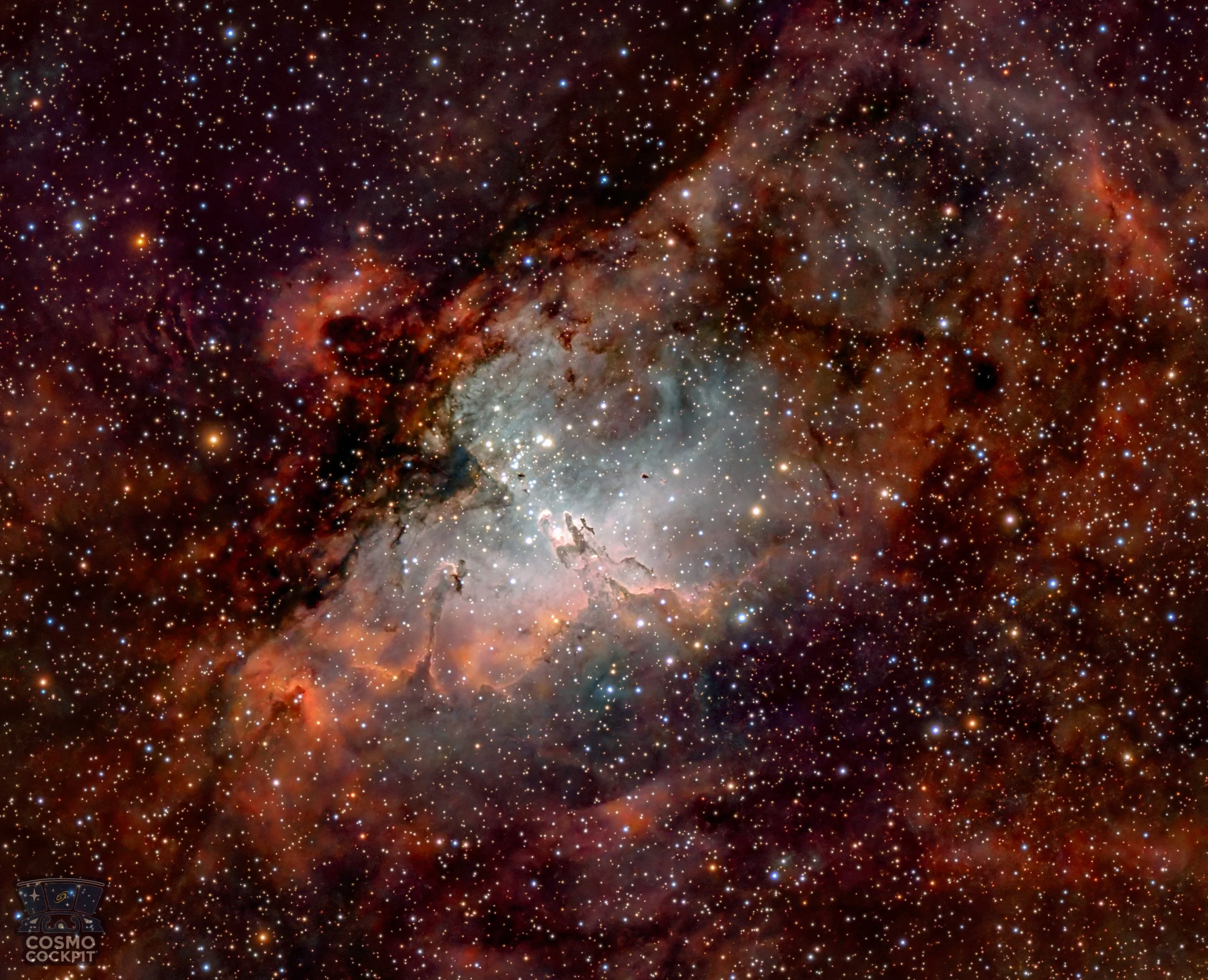
Eagle Nebula (Messier 16) - 04h 46m total exposure (Askar 103 APO telescope).
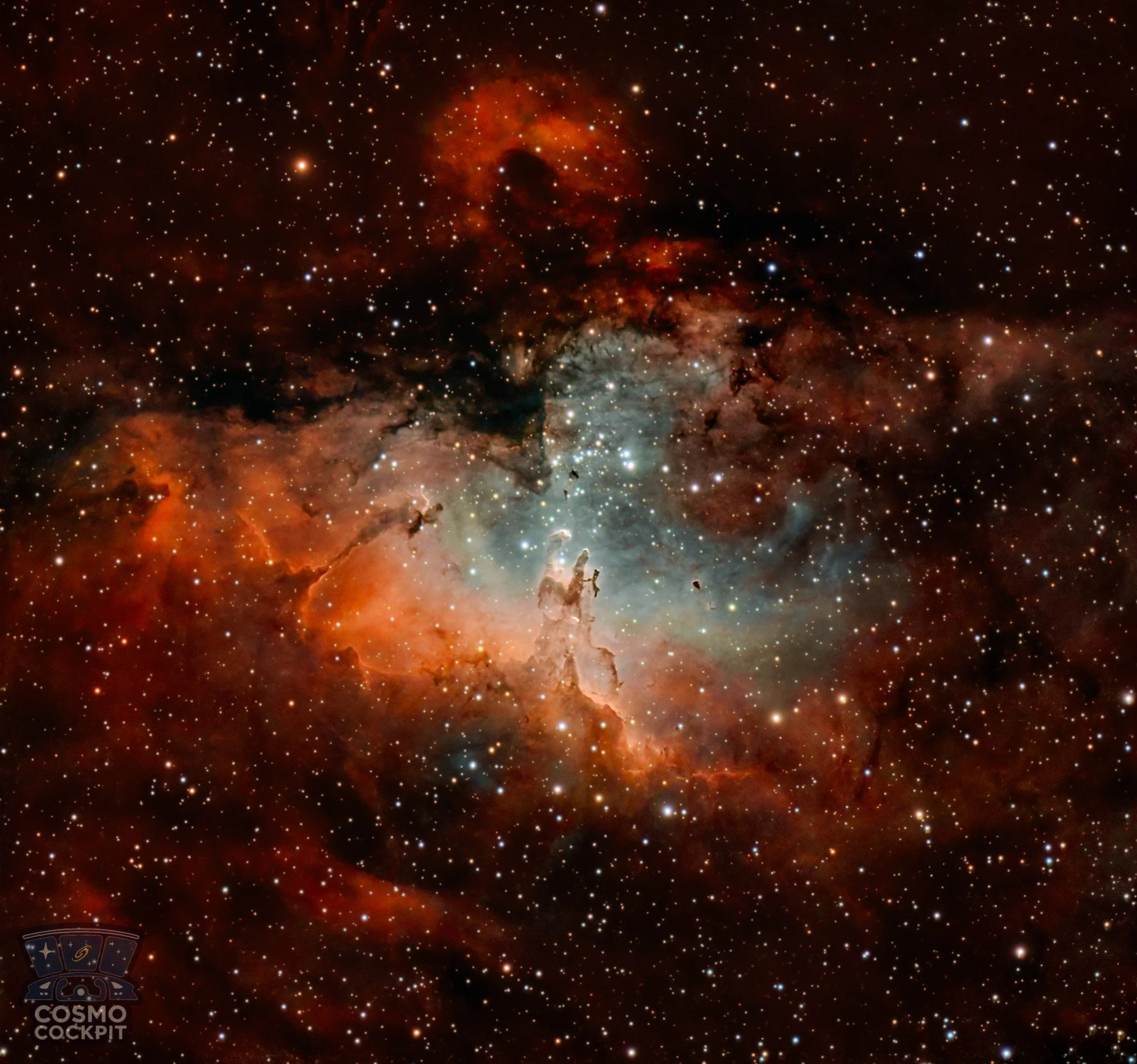
Zoomed image of the Eagle Nebula (M16), after 9h 19m total combined exposure (4h 33m in Aug 2025 - Celestron NexStar 8 SE; 4h 46m in Aug 2026 - Askar APO 103).
Few celestial objects capture the imagination quite like the Eagle Nebula (Messier 16). Located about 5,700 light-years away in the constellation Serpens, this vast star-forming region is home to one of the most iconic astronomical images ever taken: the Pillars of Creation.
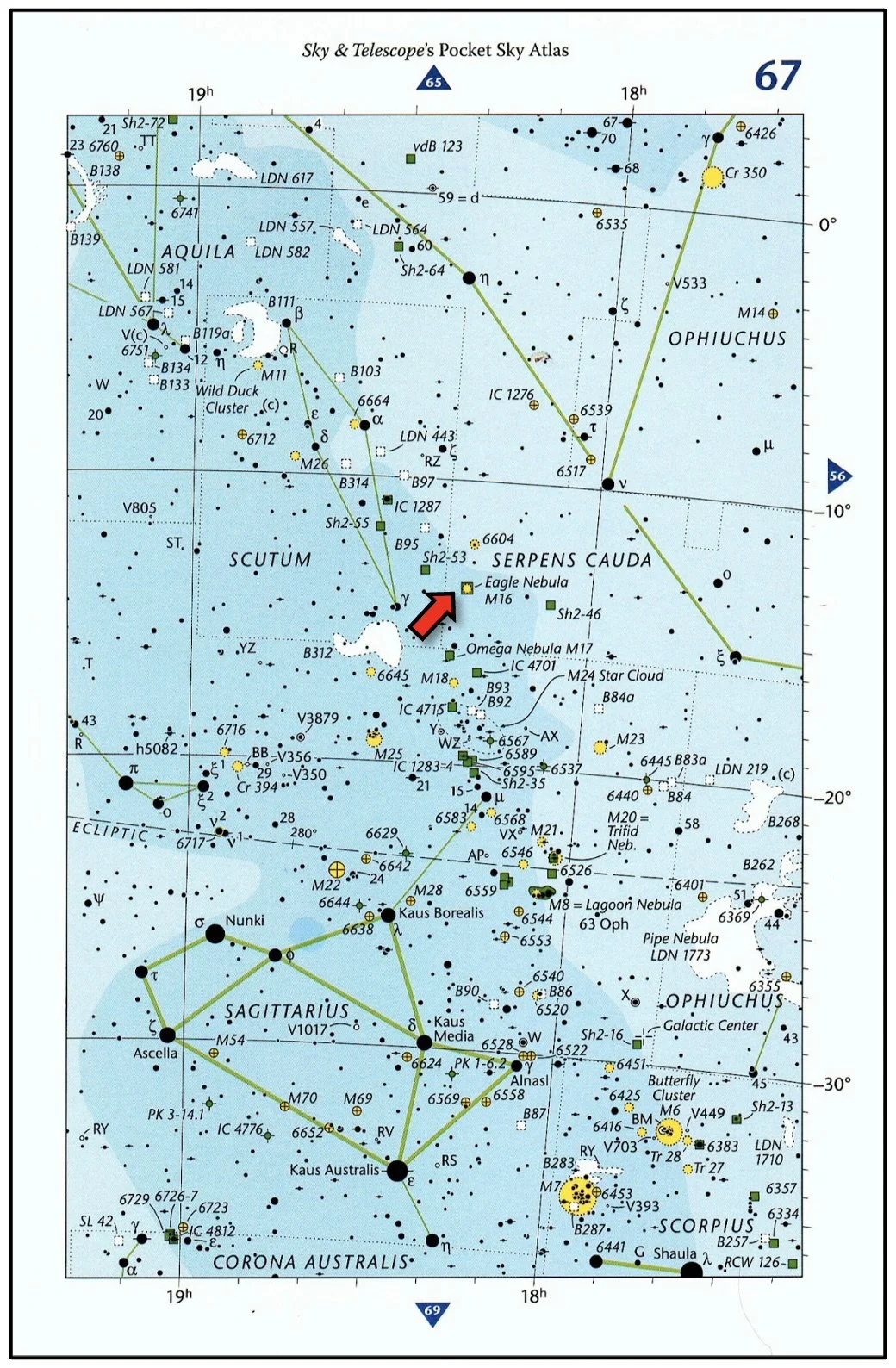
Sky and Telescope's Pocket Sky Atlas - Roger W. Sinnott.
History
The Eagle Nebula was first recorded in 1745–46 by the Swiss astronomer Jean-Philippe de Chéseaux and later catalogued by Charles Messier as M16.
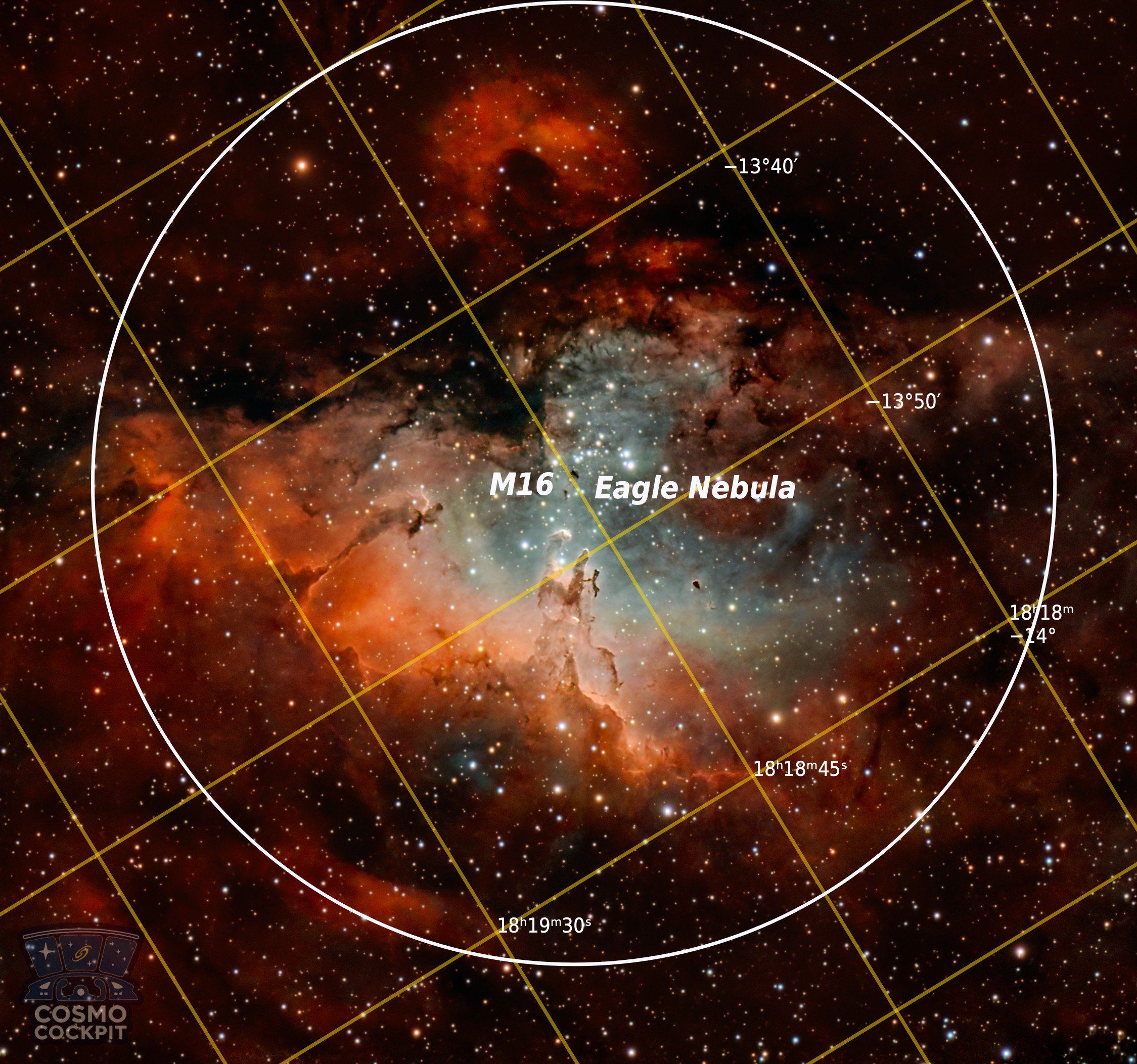
The Eagle Nebula (M16), as plate-solved and annotated in PixInsight.
Astrophysics
M16 is one of the most luminous and youngest open clusters in the Messier catalog: 376 stars tightly packed into a diameter of about 35 light-years. The oldest M16 stars are only 6 million years old; most are 1-2 million years old.
What we call the Eagle Nebula is actually a combination of two objects: the emission nebula IC 4703 and the open star cluster NGC 6611. Together, they form a sprawling region of glowing gas and newborn stars spanning 55 to 70 light-years.
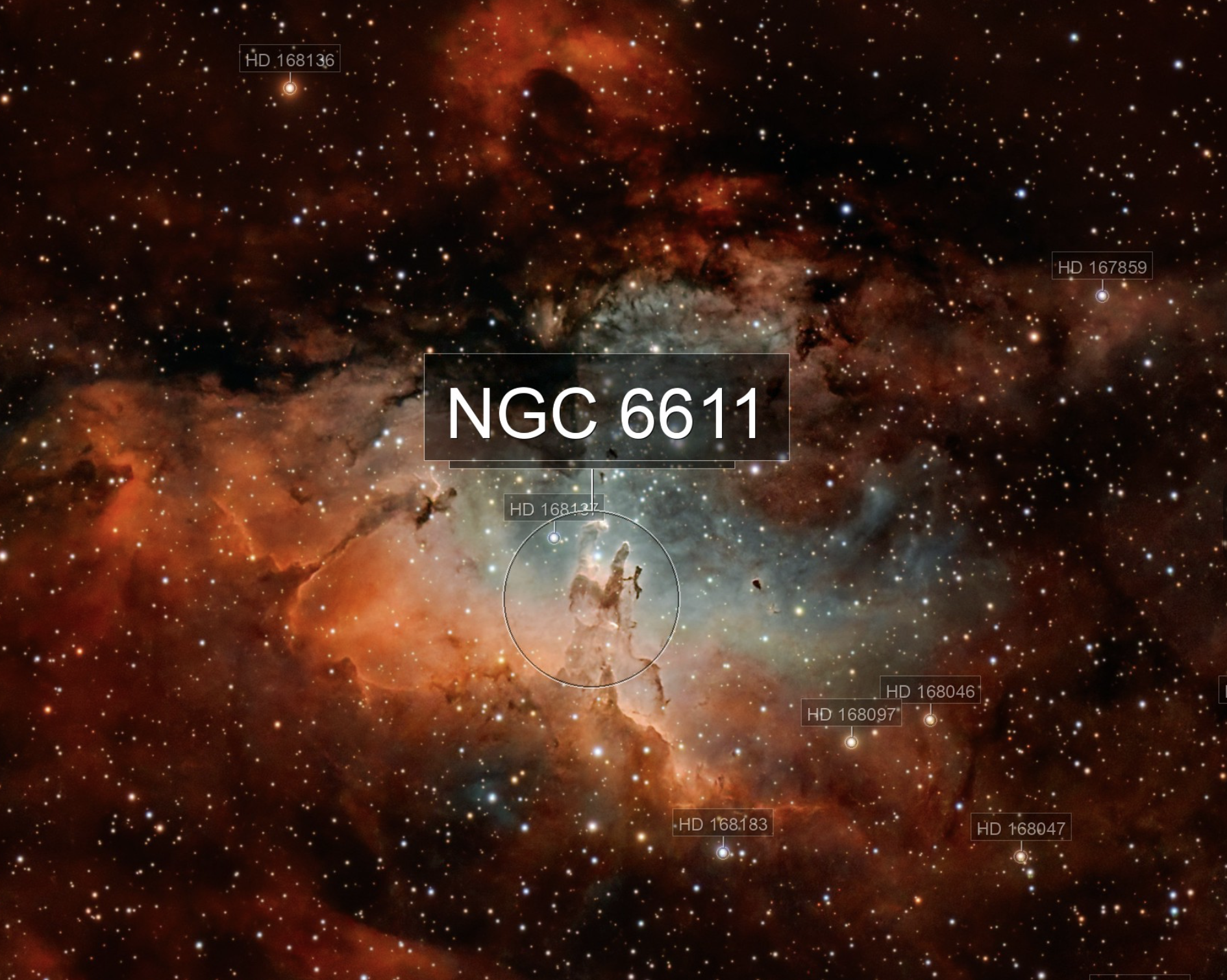
The Eagle Nebula (M16), as plate-solved and annotated on the AstroBin website.
The Pillars of Creation
The most famous feature of M16 is the Pillars of Creation, towering columns of cold gas and dust stretching 4–5 light-years tall. Captured in breathtaking detail by the Hubble Space Telescope in 1995, these pillars conceal protostars within their dense pockets, cosmic embryos destined to ignite into new suns.
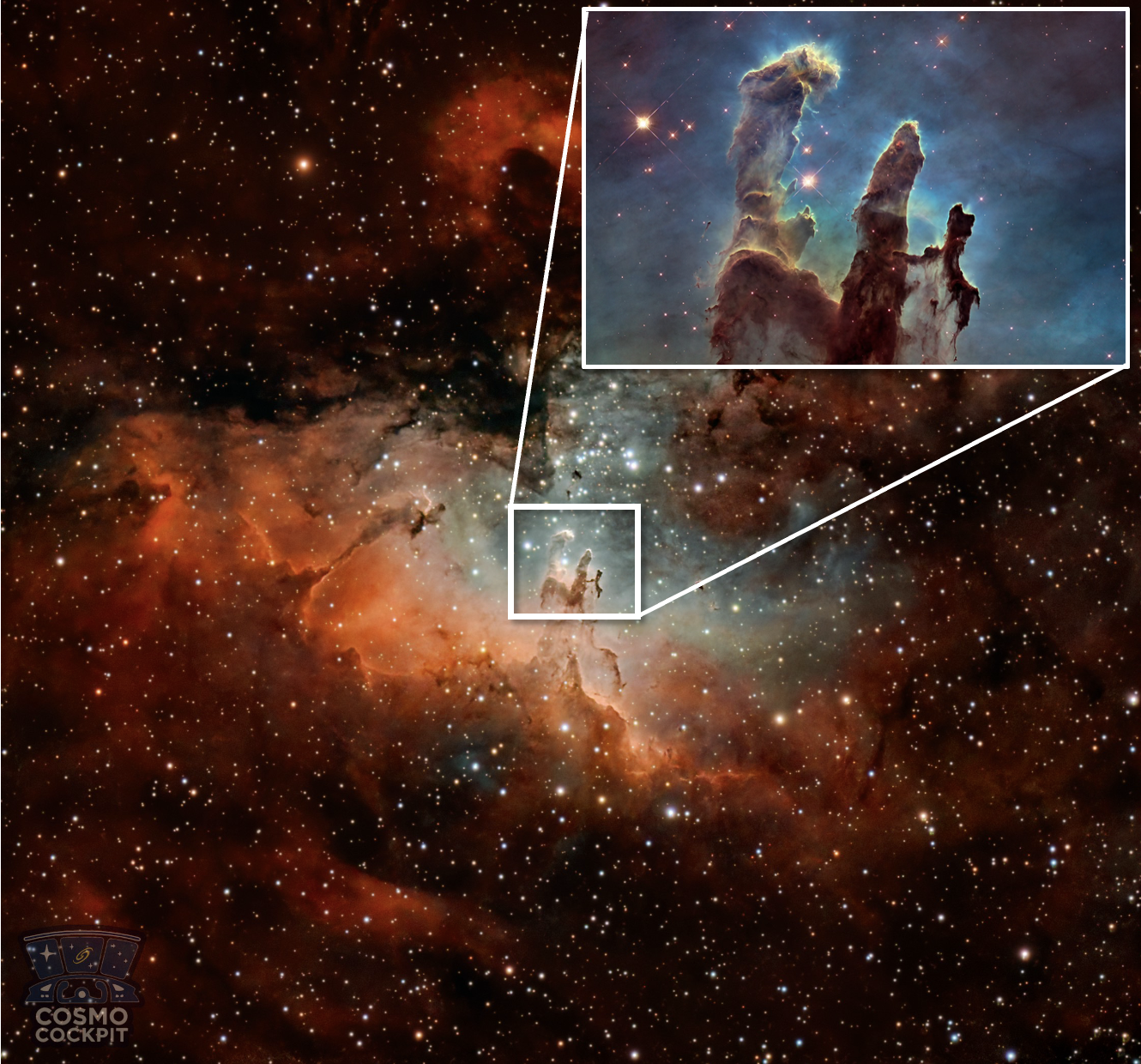
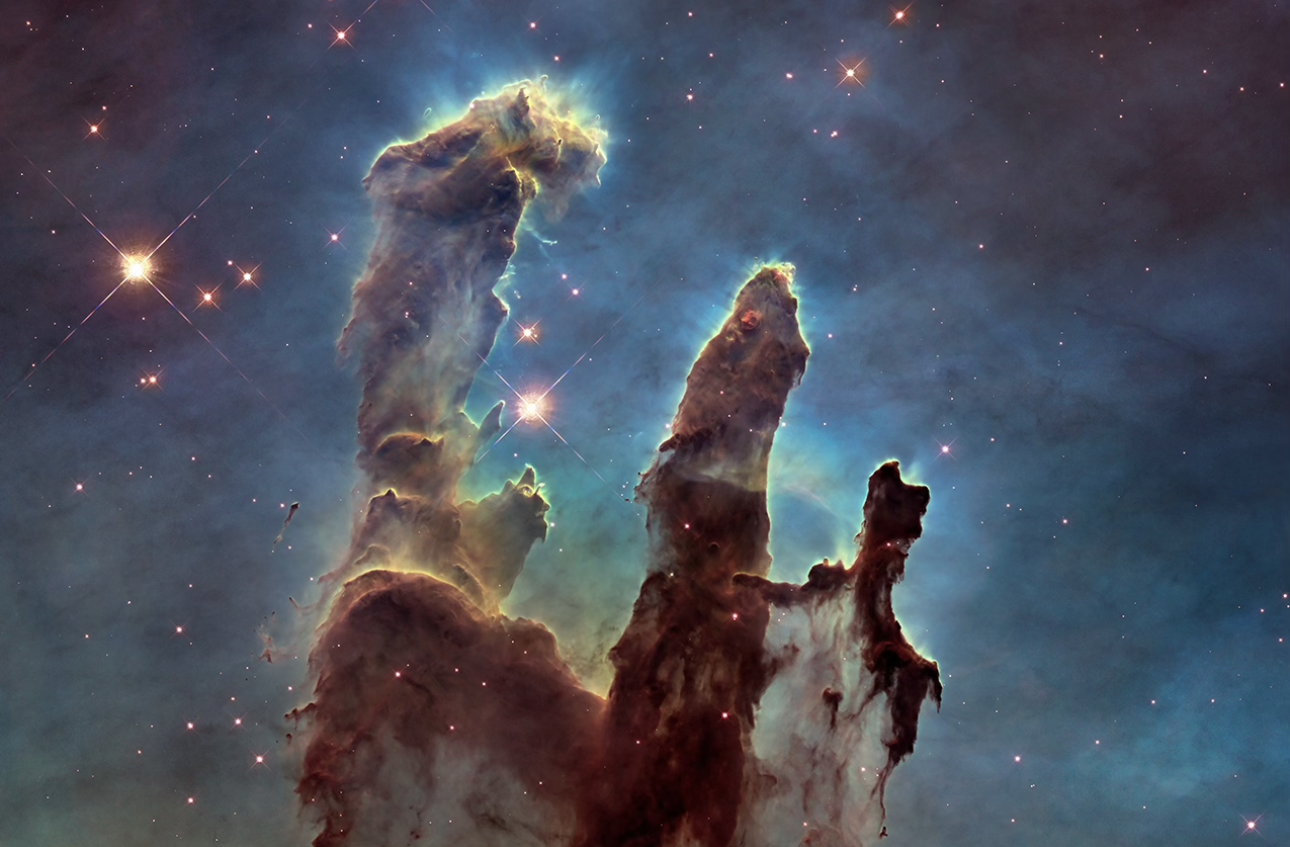
The most famous feature within the Eagle Nebula is the Pillars of Creation, three towering columns of dust and gas sculpted by intense ultraviolet radiation from young, massive stars. These pillars contain Evaporating Gaseous Globules (EGGs) - dense knots of gas that are potential sites for ongoing star formation. (NASA, ESA, and the Hubble Heritage Team).
Observation
The best time to observe the Eagle Nebula is from March to September, when it is highest in the night sky. While the open cluster NGC 6611 is visible in small telescopes and binoculars, the surrounding nebula requires darker skies and a larger aperture to be observed clearly (resolving the Pillars of Creation requires larger instruments and excellent conditions.
The M16 star cluster is quite recognizable to the naked eye, since it is near the edge of the dark, central band of the Milky Way. In fact, M16 would be more impressive if it did not suffer from a significant interstellar absorption caused by dark dust clouds only a few hundred light-years from us.
Astrophotography Tips
The Eagle Nebula is a rewarding but challenging target. For astrophotographers, M16 offers a rich canvas: narrowband imaging highlights its chemical composition, with Sulfur-red, Hydrogen-green, and Oxygen glowing blue in what is known as the Hubble palette (SHO).
A medium to large aperture telescope (8” or more) with a focal length of 800 – 1200 mm is ideal. Wide-field refractors can frame the entire nebula, while longer focal lengths reveal the Pillars of Creation in detail.
Narrowband filters (Hα, OIII, SII) are highly effective, especially under light-polluted skies. The Hubble palette (SHO) highlights the nebula’s structure in vivid colors.
Capture multiple long exposures (5 – 10 minutes each) in narrowband, or shorter broadband subs (2 – 3 minutes). Aim for several hours of total integration time to reveal faint details.
Patience and persistence: M16 is relatively faint compared to the Orion and the Lagoon Nebulae. Don’t be discouraged — long integration and careful processing will yield stunning results.
Check our post in AstroBin.