Heart and Soul Nebulae: A Cosmic Pair near Cassiopeia
Astrophotography is more than capturing light — it’s about telling the story of the Universe. Few targets embody this better than the Heart Nebula (IC 1805) and the Soul Nebula (IC 1848), two vast star-forming regions in the nest between the constellations of Perseus and Cassiopeia. Together, they’re known as the Heart and Soul Nebulae, a favorite pairing for both astronomers and astrophotographers.
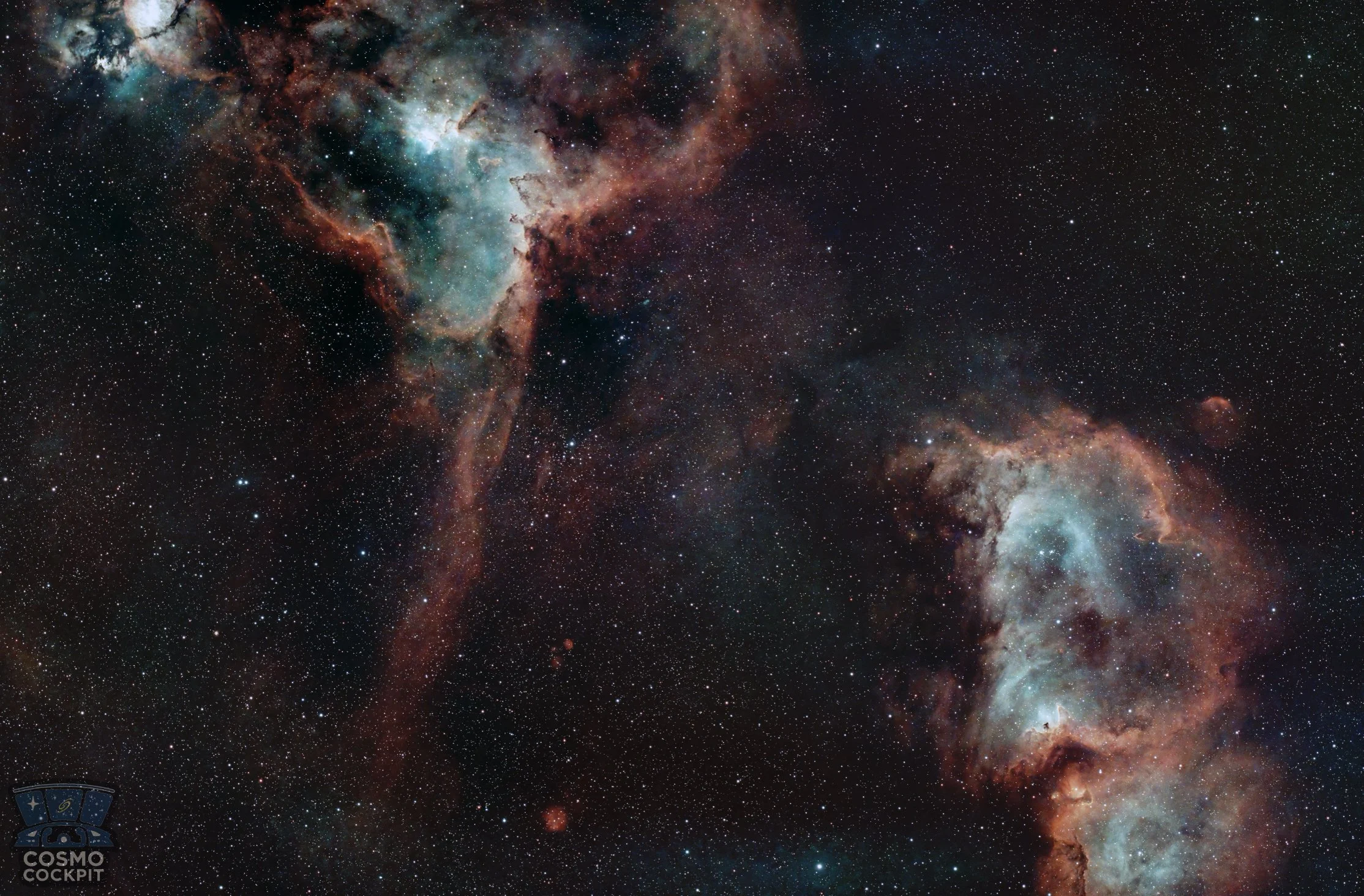
The Heart (upper left) and the Soul (bottom right) Nebulae. 8 hours total exposure.
Astrophysics
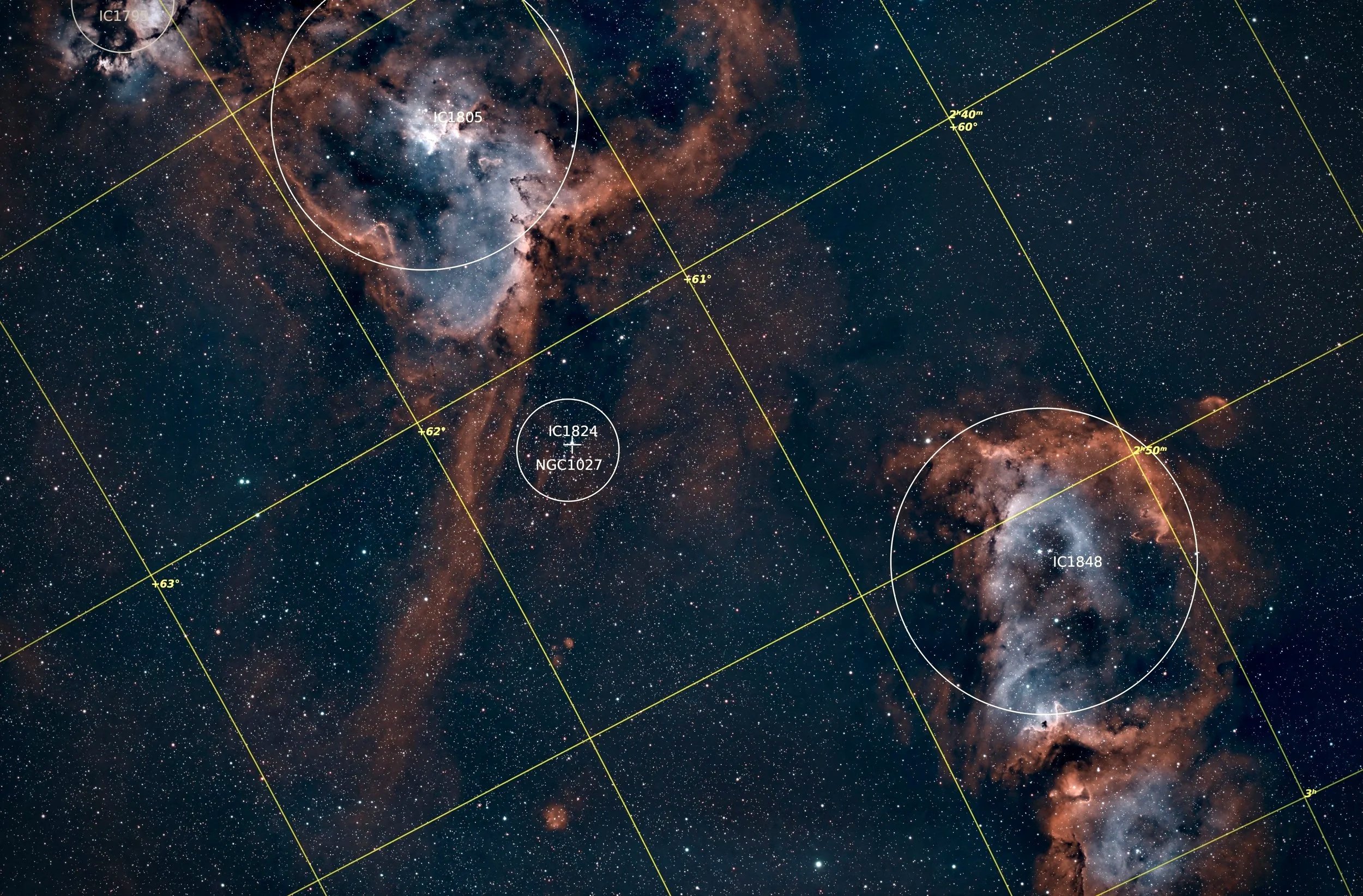
The Heart and Soul Nebulae. Plate solved and annotated in PixInsight.
Type:
Heart Nebula: emission nebula dominated by glowing hydrogen gas, sculpted by stellar winds from Melotte 15, a cluster of massive young stars.
Soul Nebula: also an emission nebula with active star formation.
Catalog Numbers:
Heart Nebula: Sh2-190, IC 1805.
Soul Nebula: Sh2-199, IC 1848.
Size:
Heart Nebula: 300 light-years.
Soul Nebula: 150 light-years.
Distance:
7,500 light-years.
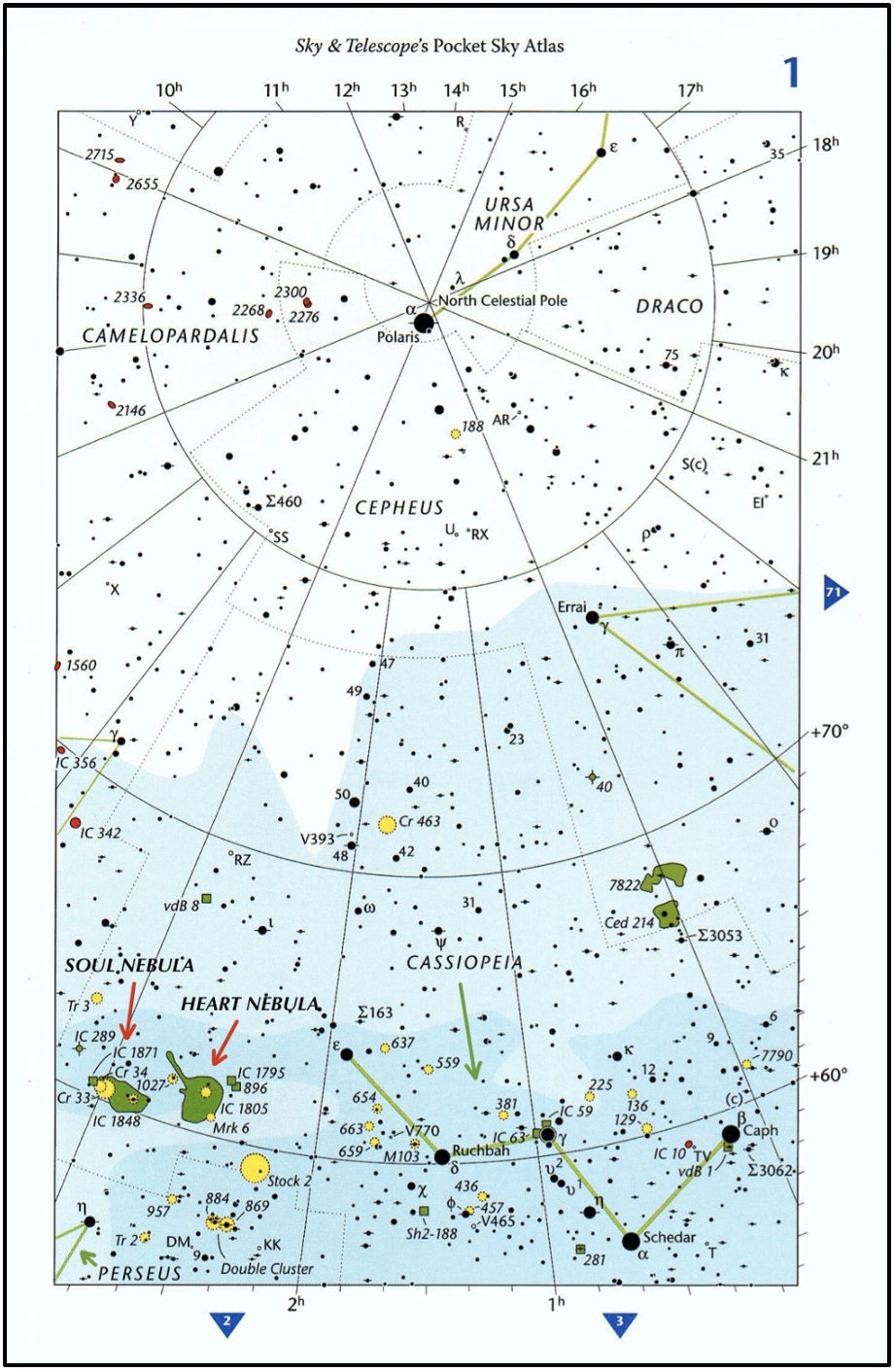
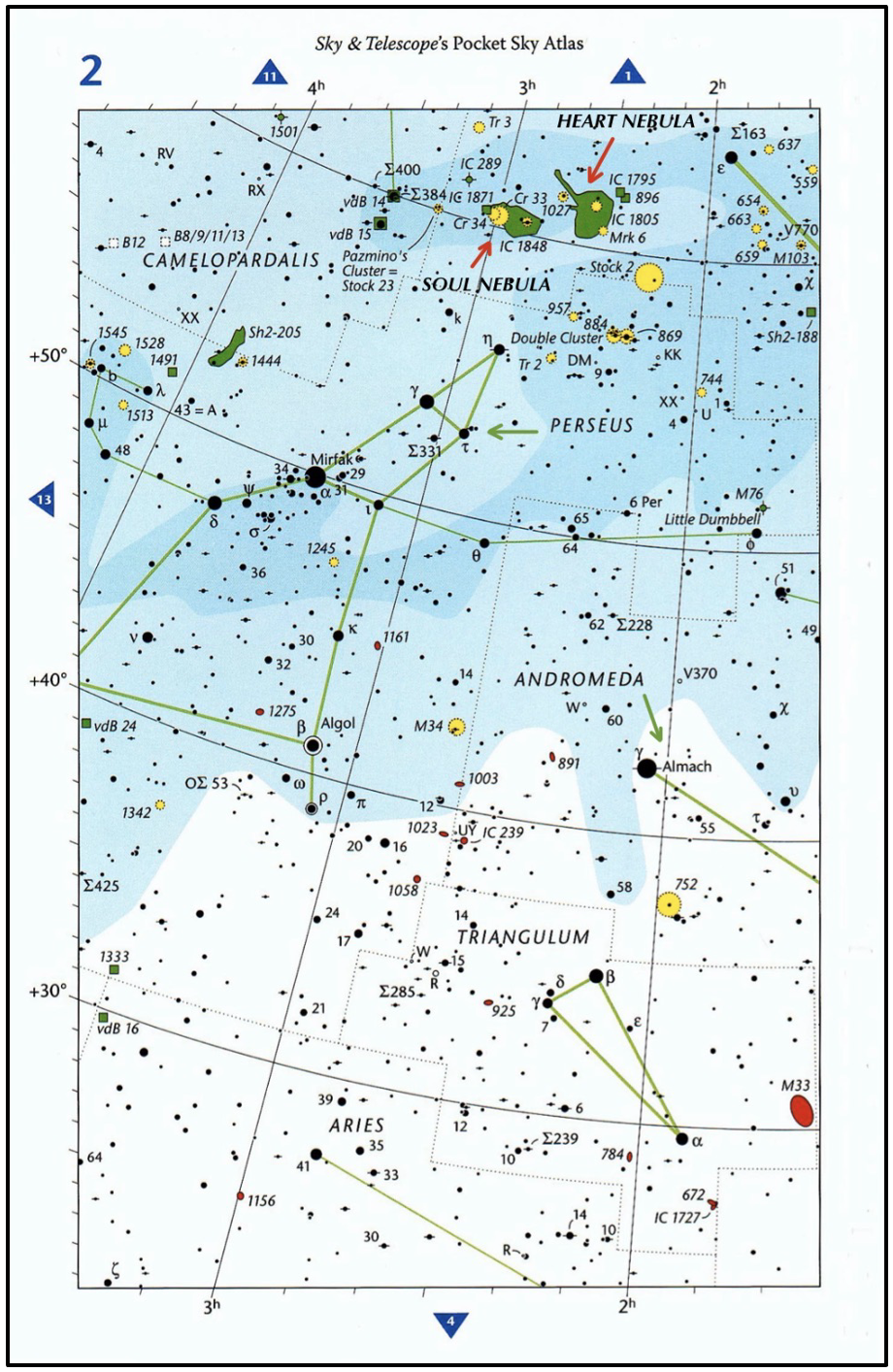
The Heart and Soul Nebulae - Sky & Telescope’s Pocket Sky Atlas, Roger W Sinnott.
The Heart Nebula (IC 1805)
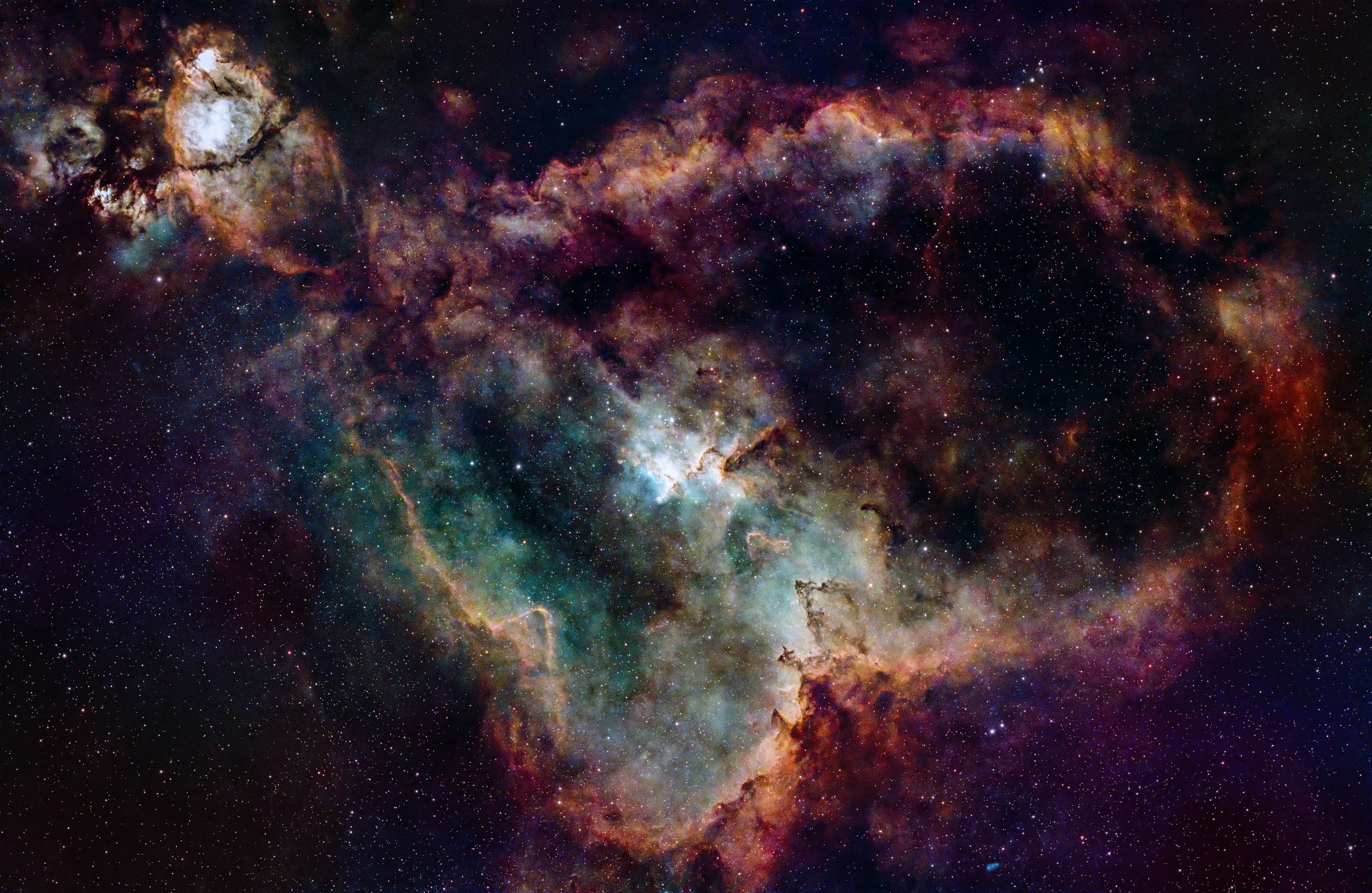
The Heart Nebula (IC 1805). 3 hours and 20 minutes exposure time divided among narrowband filters (Ha - SII - OIII).
The diffuse nebula IC 1795 is attached to the Heart Nebula’s tail, and further subdividing things, the bright, western side of IC 1795 is cataloged as NGC 896. The central star cluster of the Heart is known as Melotte 15, and the surrounding nebula is an exceptional target for long-focal-length telescopes.
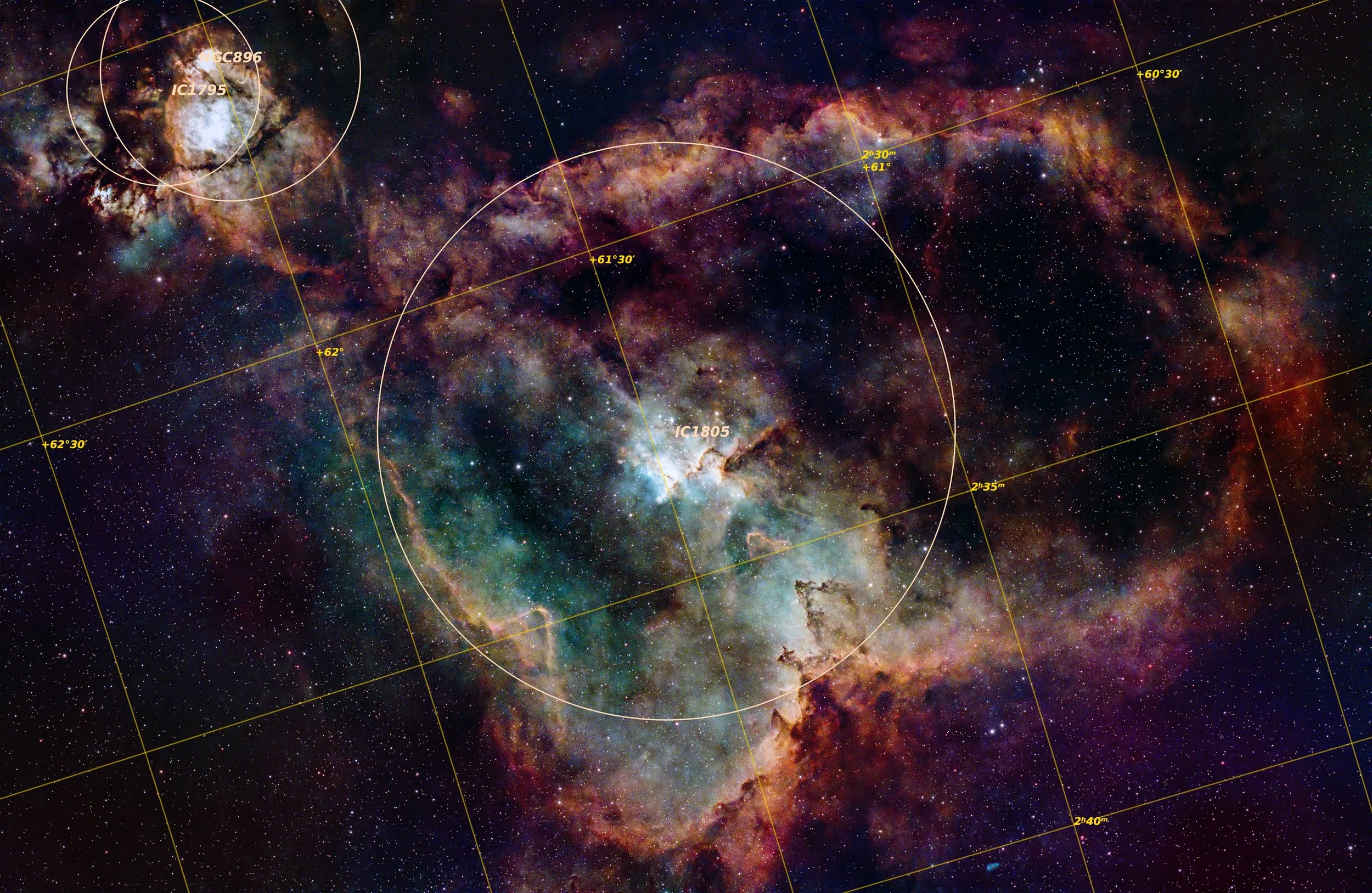
The Heart Nebula (IC 1805), as plate solved by PixInisght.
Astrophotography Notes
The Heart and Soul Nebulae aren’t just beautiful — they’re cosmic laboratories. Here, stars are born, sculpting the gas and dust into shapes that resonate with human imagination. Capturing them is both a technical challenge and an artistic reward.
The Heart and Soul Nebulae are ideal for wide-field setups, providing a 6° Field of View (FOV) (200-400 mm Focal Length), about 3° each.
Both objects have complex structures in Hα, SII, and OIII (Hα, SII, OIII). Therefore, narrowband imaging reveals stunning contrast and intricate dust pillars. Their faint structures demand long integration times, careful calibration, and precise guiding.
Check our post in AstroBin.