North America & Pelican Nebulae: Skylines of Cygnus
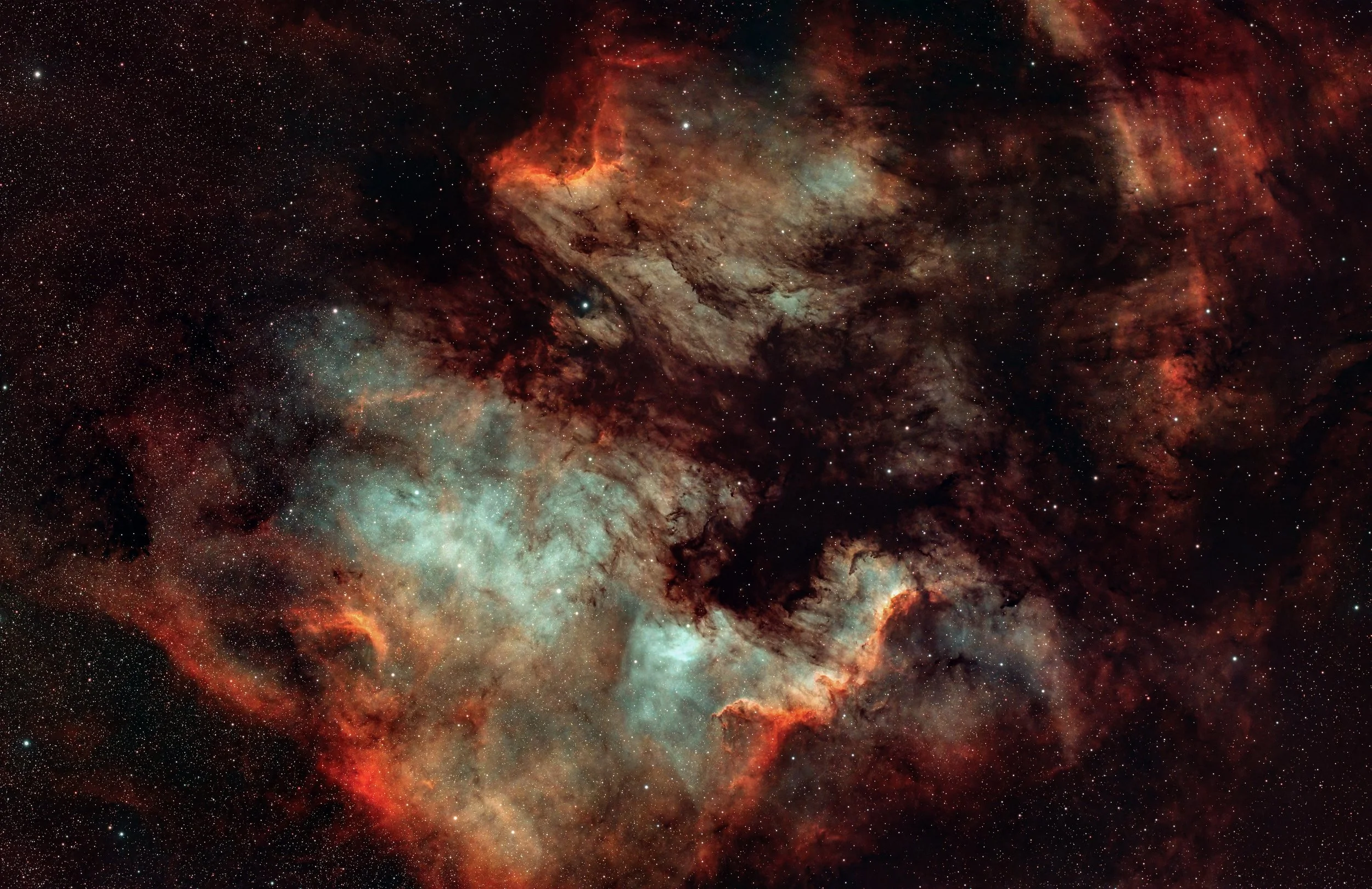
The North America (center bottom left) and the Pelican Nebulae (center top right) in the constellation of Cygnus are perfect examples of how human imagination connects celestial forms with familiar shapes. 4h 3min total exposure.
In the constellation Cygnus, two vast emission nebulae — the North America Nebula (NGC 7000) and the Pelican Nebula (IC 5070) — form one of the most recognizable regions of the summer Milky Way. Their proximity and interplay of glowing hydrogen clouds make them a favorite target for astrophotographers and a rich subject for science outreach.
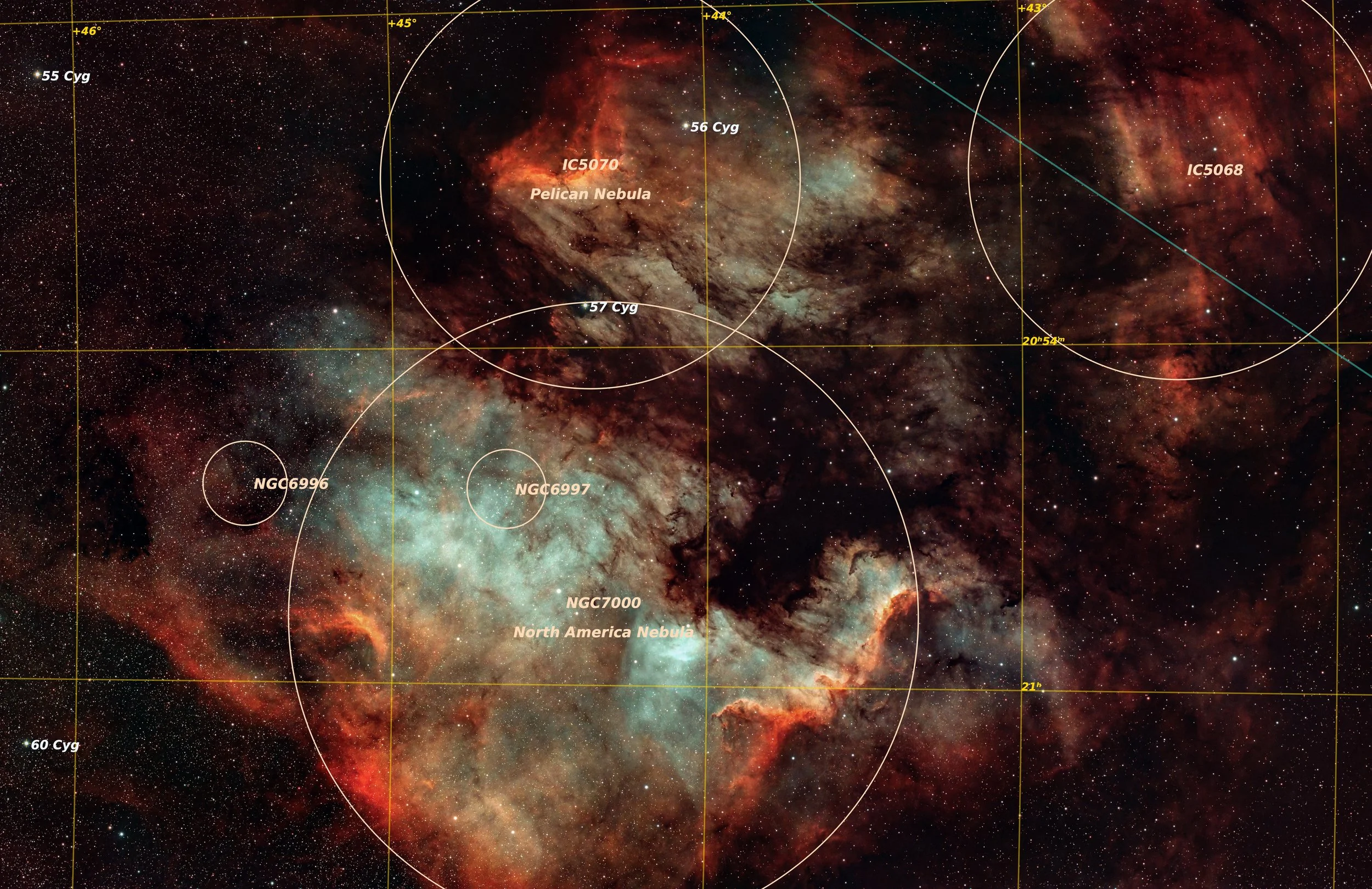
The North America (NGC 7000) and the Pelican Nebulae (IC 5070). Plate solved and annotated in PixInsight.
Astrophysics
Both nebulae lie about 2,500 light-years away and are part of the same massive molecular cloud complex in Cygnus.
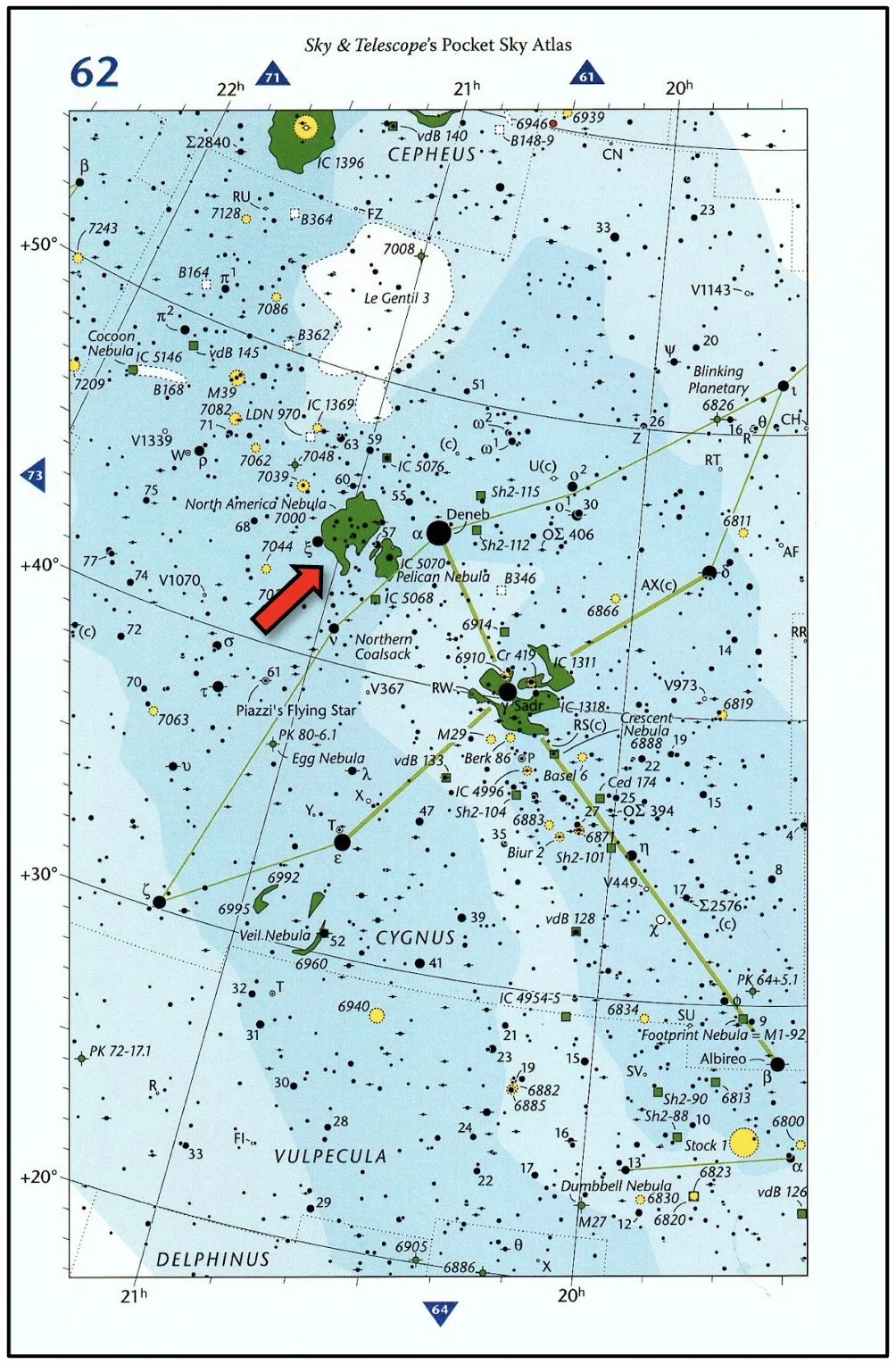
The North America Nebula (NGC 7000), named for its striking resemblance to the continent, spans over 50 light-years. Its "Gulf of Mexico" region (also known as the “Great Wall”) is a dark dust lane that sharply contrasts with the surrounding ionized hydrogen.
The Pelican Nebula (IC 5070), just to the west, resembles the bird's profile. It is undergoing active star formation, with ultraviolet radiation from young stars sculpting its intricate ridges.
Observation
Best seen in dark skies during northern summer months, rising high overhead in mid-latitudes.
Astrophotography Tips
The North America Nebula region is a vast (2.5°×3.3°), spectacular emission nebula, often imaged with the connected Pelican Nebula. Their faint structures demand long integration times and careful calibration.
Ha, SII, and OIII are abundant throughout, though Ha is far brighter (as with any emission nebula).
To avoid a cliched image, consider framing or rotating it to prompt an interpretation other than the usual.
Check our post in AstroBin: https://app.astrobin.com/i/vntbad.